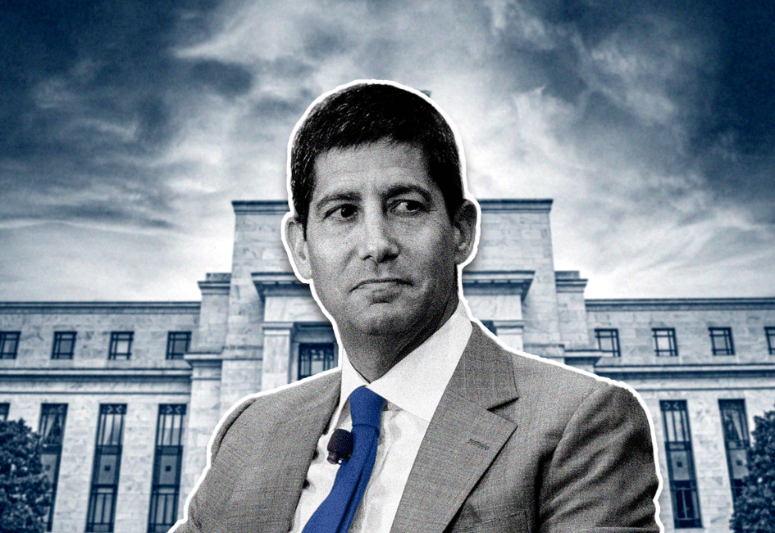
Kevin Warsh and the future of America
Ever since the start of his second term in office, President Trump has maintained a bitter and tumultuous relationship with Jerome Powell, the head of the U.S. Federal Reserve. Despite appointing Powell to the position, President Trump has leveled numerous disparaging remarks at him, going so far as to call him “a stubborn MORON” while characterizing Powell as “a stupid man” and “not a smart guy.” However, the President’s disdain for his appointee has not been confined to rhetoric alone. As of now, Jerome Powell has been subpoenaed by the President and is facing criminal charges brought by the Department of Justice. Speculation suggests that the disagreement stems from Powell’s steadfast reluctance to cut interest rates and his open defiance of President Trump’s demands. As Powell’s term draws to a close in May, President Trump has already nominated his successor and is eager to see Kevin Warsh assume the role of head of the U.S. Federal Reserve.
Kevin Warsh is 55 years old and has a long history of involvement with the Federal Reserve. His previous tenure included serving on the Fed’s Board of Governors from 2006 to 2011, during which he navigated the 2008 financial crisis and served as the Fed’s primary liaison to Wall Street and representative to the G20. Currently, Warsh is a distinguished visiting fellow at Stanford’s Hoover Institution and a lecturer at Stanford’s Graduate School of Business. He previously worked at Morgan Stanley in mergers and acquisitions and served in the George W. Bush White House, focusing on economic policy. Despite an impressive array of credentials and experience, Kevin Warsh is poised to take on a role that will present an extraordinary array of challenges. Consequently, the question persists: “How will the American economy perform under Kevin Warsh’s leadership?”
President Trump has been advocating vigorously for lower interest rates; however, economist Kenneth Rogoff has noted that Mr. Warsh is “even more hawkish than Powell,” implying that Mr. Warsh may favor keeping rates higher to combat inflation, a stance contrary to the one President Trump harbors. Wall Street analysts believe that Warsh would not consistently acquiesce to President Trump’s demands, a prospect that has reassured markets concerned about the potential compromise of Federal Reserve independence. Furthermore, Warsh has criticized the post-financial crisis Federal Reserve for excessive monetary stimulus, arguing that such policies helped sow the seeds for future economic crises. This suggests he may favor a more conservative and restrained approach to monetary policy.
Currently, America is grappling with a wide array of economic challenges. The most pressing is the looming debt crisis: federal debt is poised to exceed the size of the economy for the first time since World War II in 2026, a monumental problem. Social Security is expected to reach its funding cliff in 2030, earlier than the previous estimate of fiscal year 2034, primarily due to reduced immigration levels. Moreover, America has been at the forefront of persistently high inflation for nearly a decade. While inflation has moderated from its 2022 peak, it remains elevated at approximately 2.8% for core PCE, well above the Federal Reserve’s 2% target. Goldman Sachs projects that current tariff regimes will increase inflation by 1 percentage point between the second half of 2025 and the first half of 2026. Furthermore, the Jobs Market Paradox has been keeping economists awake at night. The economy is growing at a solid pace, yet wage gains are decelerating, hiring has largely stagnated since summer 2025, and unemployment stands at its highest level in more than four years. The labor market has settled into what economists characterize as a “low-hire, low-fire equilibrium.” Additionally, America’s growing dependence on artificial intelligence has triggered concern across the globe. Investments in software and information processing equipment accounted for half of all growth in the first half of 2025, compared to merely 10% in the first half of 2019. Deutsche Bank has even suggested that the economy might already be approaching recession territory were it not for technology spending.
Walsh’s philosophy functions on 3 major economic principles. His core beliefs are a colossal shift from the Powell era.
1. Disciplined Inflation Targeting:
Warsh has consistently argued that the Federal Reserve should prioritize its 2% inflation target over short-term growth objectives, even if it necessitates tighter monetary policy. This approach marks a significant departure from the more accommodative stance traditionally adopted by previous heads of the Federal Reserve.
2. Balance Sheet Normalisation (Quantitative Tightening):
Of Warsh’s economic policies, this is perhaps his most distinctive and unorthodox. Warsh has criticized the Fed’s “ample reserves” regime, which maintains an expanded balance sheet to keep short-term interest rates low, and advocates instead for quantitative tightening to shrink the balance sheet and restore market liquidity dynamics. He views this as the Fed essentially financing government spending and seeks to reverse it..
3. Structural Over Cyclical Analysis:
Unlike many Fed officials, Warsh attributes inflation to long-term fiscal and monetary decisions rather than temporary shocks such as supply chain disruptions or pandemics. This perspective suggests that he will prioritize long-term policies, eschewing the implementation of impulsive monetary interventions.
The Paradox: What Trump Wants vs. What Warsh Will Deliver
President Trump’s agenda suggests he would prefer Warsh to aggressively slash interest rates; however, Warsh’s track record indicates something vastly different. Warsh’s views on monetary policy have long been characterized as hawkish, meaning he is inclined toward tighter policy and generally higher interest rates to maintain inflation control, even at the expense of slower economic growth. If President Trump anticipates that Warsh will be able to implement aggressive rate cuts with ease, he may be in for an unpleasant surprise. Warsh has proposed what analysts characterize as a compromise approach with the administration:
The Give: The Fed will aggressively lower interest rates, aligning with President Trump’s desires
The Take: The Fed will aggressively reduce its balance sheet through quantitative tightening and sell assets like Mortgage-Backed Securities to withdraw excess liquidity
Warsh’s term as head of the Federal Reserve will mean many things for the American economy.
Warsh would likely advocate for fiscal discipline from Congress rather than enabling further borrowing through accommodative monetary policy. This represents a tough love approach that could generate short-term economic pain. A more aggressive stance on inflation control will be adopted. Even with tariffs potentially driving inflation higher in early 2026, Warsh would prioritize price stability over short-term growth concerns.
Warsh has no intention of being branded as Jerome Powell 2.0; yet, he will make considerable efforts to align his policies with President Trump’s broader economic vision. His approach prioritizes long-term price stability and institutional credibility over short term political demands or growth targets. For a nation grappling with massive debt, persistent inflation, an anomalous jobs market, and questions surrounding AI sustainability, Kevin Warsh will have to conquer what many consider an insurmountable challenge. Only time will reveal how the American economy evolves under his leadership.
 Salmanwrites.com
Leave a comment